
Precision potential drop instruments for materials research & industry
Matelect designs and manufactures ACPD and DCPD crack growth monitors, EBIC/EBIV systems for scanning electron microscopes, and the accessories that support them — trusted by testing laboratories worldwide.
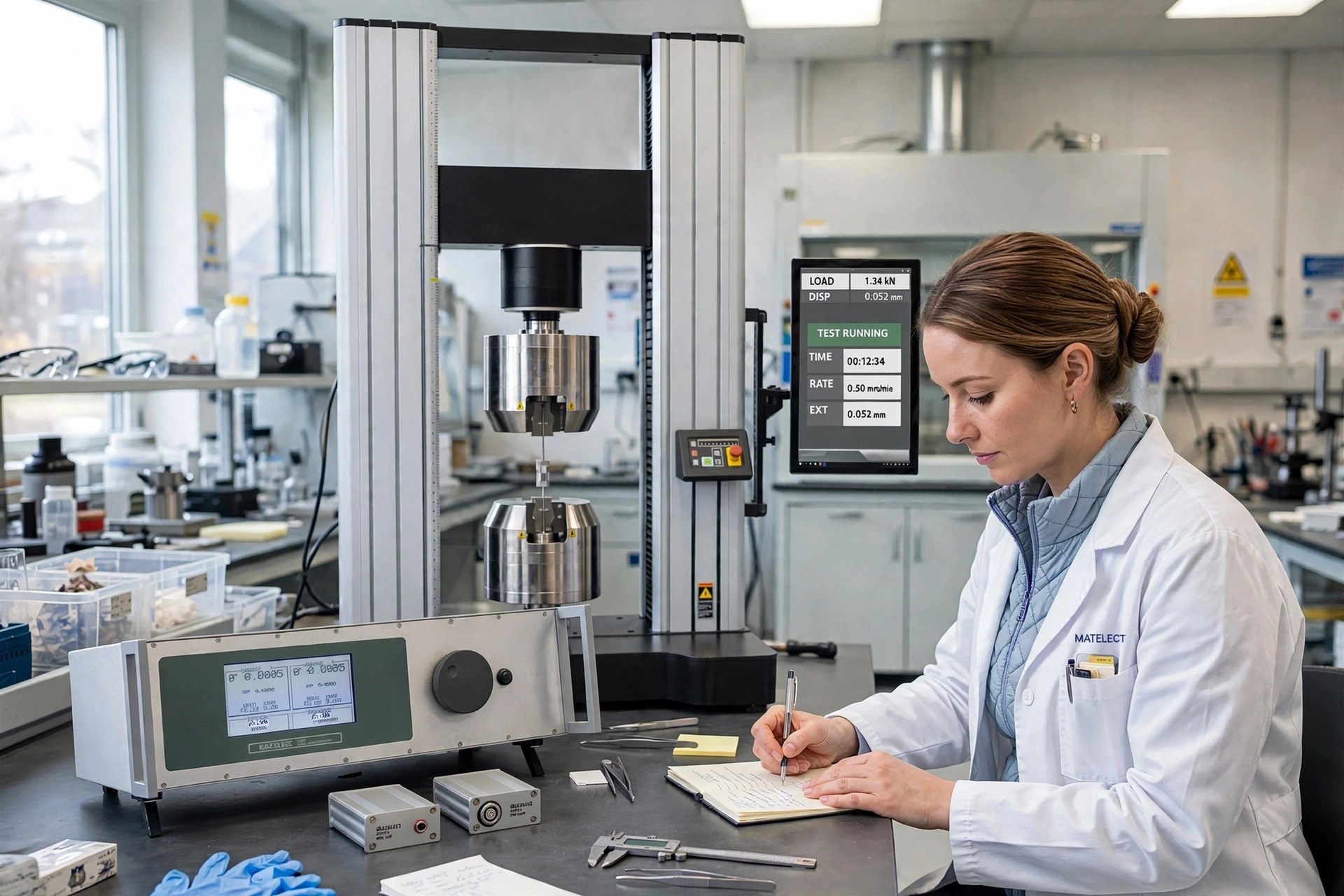
Instruments built for crack growth measurements & materials research
Matelect Ltd designs and manufactures precision scientific instruments for research and industry. Our principal products are potential drop instruments for measuring crack initiation and propagation in metals. We also manufacture a leading EBIC & EBIV system for use with scanning electron microscopes, along with a full range of accessories for all our products.
ACPD Instruments
Alternating current potential drop crack growth monitors, from the compact ACM-1A to the microprocessor-controlled CGM-7 — the industry-regarded premier ACPD instrument for research use.
Explore ACPD range →DCPD Instruments
Pulsed direct current potential drop monitors including the DCM-2, a favourite among the DC potential drop community for its functionality and usability.
Explore DCPD range →Software & Accessories
PDsoft data-acquisition software, LabVIEW drivers, scanner systems, handheld probes and pre-amplifiers that extend every instrument in our range.
See PDsoft & drivers →ACPD & DCPD potential drop measurement
Both techniques pass a current through the metal under test and measure the resultant voltage drop across the specimen. A growing defect alters this voltage, and with suitable calibration, a precise measure of defect depth can be obtained — covered by the ASTM E647 standard.
The greatest benefit of PD is that the specimen is the sensor. PD directly responds to changes occurring in the specimen itself, not to the characteristics of a separate sensor attached to the specimen. The end-user need not concern themselves with the sensor's capability to deal with extreme environmental conditions. In short, if we can connect to it, we can measure it! Measurements at elevated temperatures, in various solutions and atmospheres have all been achieved.

ACPD — Alternating Current
High sensitivity via skin-effect enhancement at the chosen operating frequency. Ideal for slow crack growth, crack sizing, crack initiation, dynamic crack growth and crack closure studies.
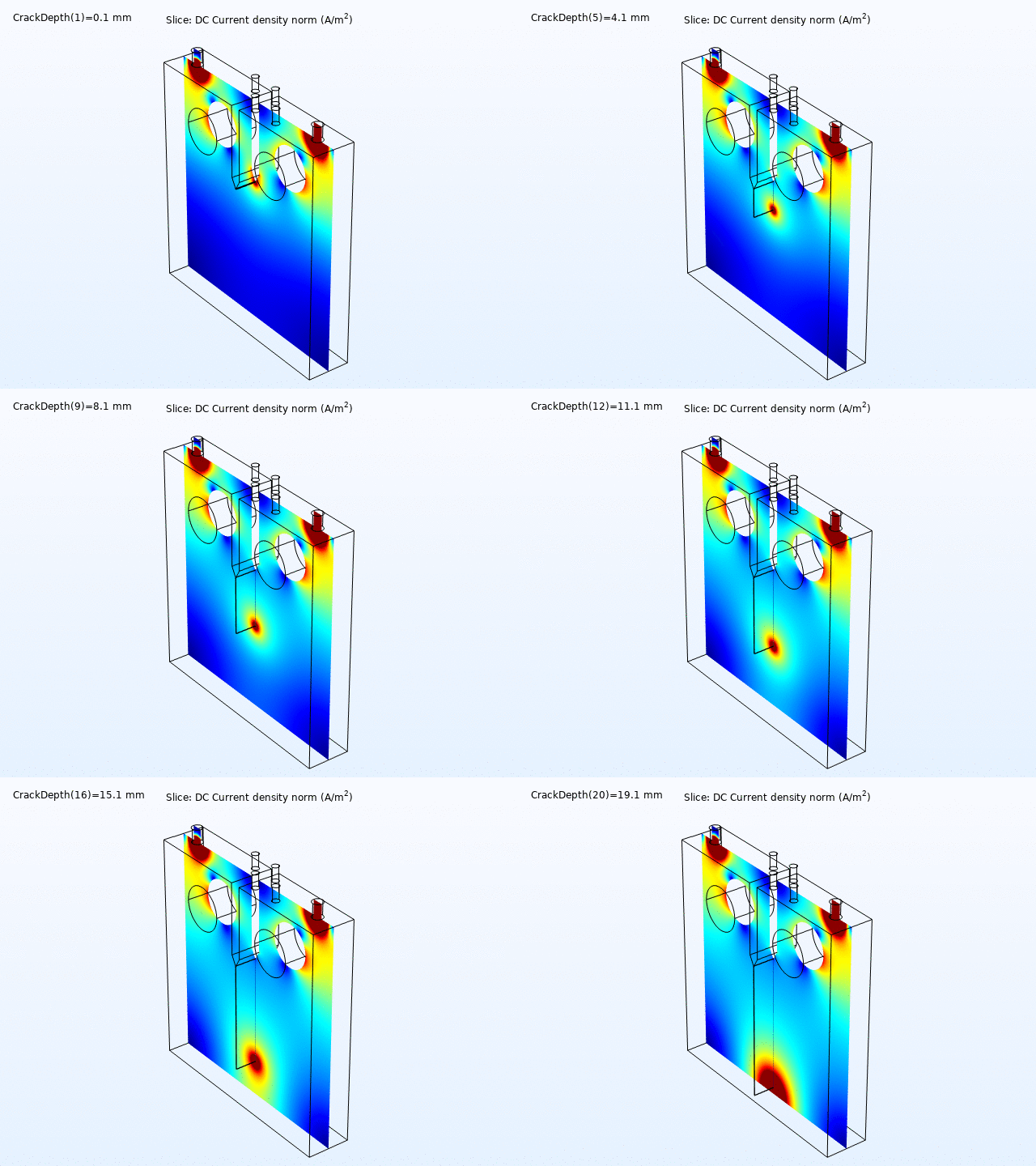
Simulation: AC current concentrates near the surface (the skin effect), the principle behind ACPD's sensitivity to shallow crack growth.
DCPD — Direct Current
Generally simpler to set up than ACPD, using pulsed direct current. Well suited to fatigue studies and condition monitoring.
Simulation: DC current spreads through the full cross-section, the basis of the DCPD technique.
Need help choosing the right instrument?
Our team — all university graduates with research backgrounds — can help you specify the right ACPD or DCPD system, or discuss a bespoke design.
Contact Matelect