
DCM-2 DCPD Crack Growth Monitor
Data sheet, features and applications for the DCM-2.
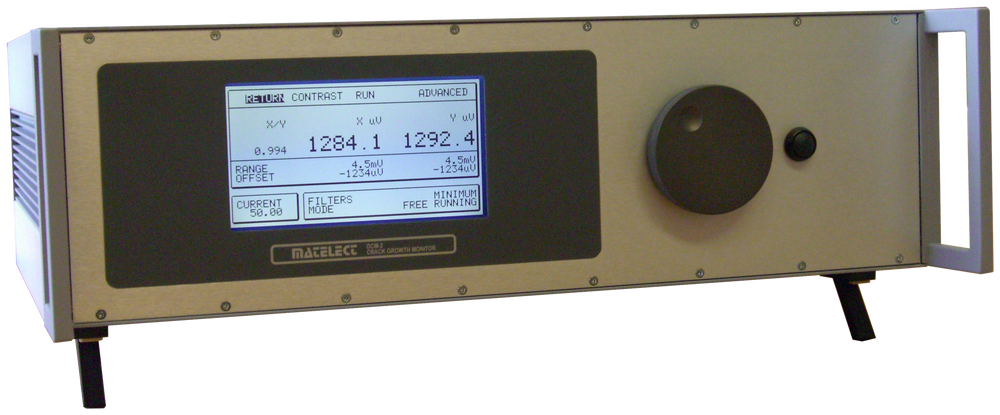
DCPD Instrument
DCM-2 DCPD Crack Growth Monitor
The DCM-2 is a modern, microprocessor-based instrument for measuring crack depth in metals undergoing materials testing. Building on the success of the DCM-1, it incorporates customer feedback across an impressive features list.
It uses the pulsed current potential drop method (DCPD), an established technique also covered by the ASTM E647 standard: a constant current is passed through the metal under test and the resultant voltage drop is measured. DCPD is generally regarded as easier to set up than ACPD, though care is required to attain comparable crack-depth resolution due to the extra opportunity for experimental noise.
Features
- Capable of reversing DCPD
- Sophisticated filtering with advanced sampling options
- High current output up to 50A, variable in 10mA steps
- Built-in scan controller for direct control of high-current scanners
- Pulsed DCPD as standard
- Advanced triggering, including peak, trough and mid-point of load-cycle waveform input
- Variable DC offsets for removal of standing voltages
- Two channels as standard: reference and specimen
Applications
- Slow crack growth
- Crack sizing
- Dynamic crack growth studies
- Crack closure studies
- Crack initiation
- Fatigue crack initiation
- Condition monitoring
- Stress corrosion testing